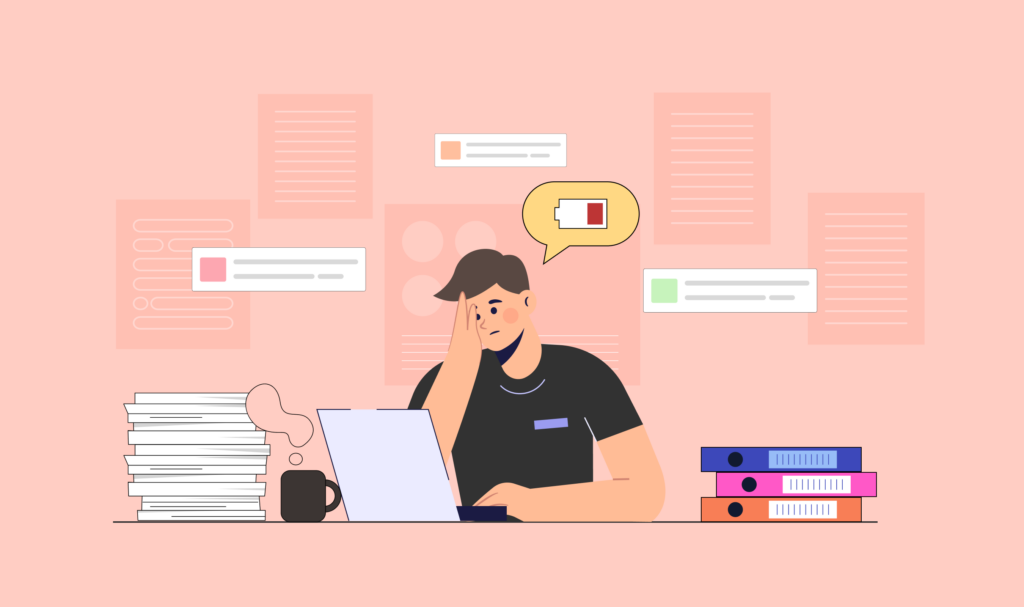
People don’t avoid hard work. They avoid unclear work. Teams will willingly take on tight deadlines, complex problems, and long hours. But give them a task with fuzzy expectations, shifting goals, or missing context, and energy drops almost instantly. This is why unclear work feels harder than hard work in most teams.
This isn’t about laziness or lack of motivation. It’s about how the human brain processes effort. Hard work is demanding. Unclear work is draining. And modern workplaces create far more of the second than the first.
Effort Has a Shape. Ambiguity Doesn’t.
Hard work usually has structure:
A clear goal.
Defined constraints.
A visible finish line.
Even when it’s difficult, the brain knows how to engage. Unclear work on the other hand:
Lacks boundaries.
Has moving definitions of “Done”.
Requires constant interpretation.
Instead of applying effort people are forced to “guess”. Guessing is exhausting.
Mental Load vs Physical or Cognitive Effort
Hard work consumes energy while you are are doing it. Unclear work consumes energy even when you’re not doing it. It creates:
Background anxiety.
Persistent rumination.
A sense of unfinished responsibility.
People think about unclear tasks in shower, during meetings, and late at night – not because they’re hard, but because they are unresolved. This is mental load, not effort. And mental load compounds.
Ambiguity Forces Continuous Decision-Making
Clear work lets you execute.
Unclear work forces you too repeatedly decide:
Is this the right next step?
Should I wait or move forward?
Am I doing too much or not enough?
These micro-decisions never stop.
Decision making is one of the fastest ways to drain cognitive energy. When it’s constant and low quality , fatigue sets in long before progress appears.
When work is unclear, people don’t fear effort. They fear wasted effort.
Without clarity:
Progress feels fragile.
Confidence stays low.
People hedge instead of committing.
Every actions carries the risk of having to redo it later. That uncertainty makes even small tasks feel disproportionately heavy.
Why People Delay Unclear Work (Even When It’s Important)
Unclear work triggers a specific response:
Avoidance disguised as prioritization.
People tell themselves:
“I’ll come back to this when it’s clearer”.
“Let me finish something else first”.
This isn’t procrastination. It’s the brain trying to protect itself from open-ended cognitive strain.
Unclear Work Breaks Momentum
Momentum thrives on predictability:
Do work.
See progress.
Gain Confidence.
Unclear work interrupts this loop. Because outcomes are uncertain and effort doesn’t reliably translate into visible progress. Teams slow down not because they’re inefficient but because the feed back loop is broken.
Why Smart Teams Still Struggle
Unclear work is often mistaken for:
Complex work.
Strategic work.
Early-stage thinking.
But complexity and ambiguity are not the same. Complex work can still be clear, ambiguous work cannot be.
Even high-performing teams burn out when ambiguity becomes the default state.
Modern Work Creates More Ambiguity Than Ever
Today’s work environments unintentionally manufacture unclear work:
Goals change faster than documentation.
Decisions live in conversations.
Ownership is implied, not explicit.
Tools capture activity, not intent.
So people spend more time interpreting work than doing it.
The Emotional Weight of “Am I Doing This Right?”
Unclear work creates quiet emotional strain. People hesitate to ask for clarity because:
They don’t want to look incompetent.
They assume others already understand.
They fear slowing things down.
So they carry uncertainty silently. Overtime this erodes confidence and motivation far more than hard work ever could.
Clarity Reduces Effort Even When the Work Is Hard
When work is clear:
People move faster.
Decision feel lighter.
Progress feels earned.
Clarity doesn’t make work easy. It makes effort efficient. Teams can spend their energy on execution instead of interpretation.
What Clarity Actually Looks Like
Clarity is not just more detail. It’s:
A clear outcome.
An explicit owner.
A visible next action.
A shared understanding of what “done” means.
When these exist, even demanding work feels manageable.
Designing Work That Doesn’t Exhaust People
If work consistently feels heavy, the problem is rarely workload alone. It’s ambiguity.